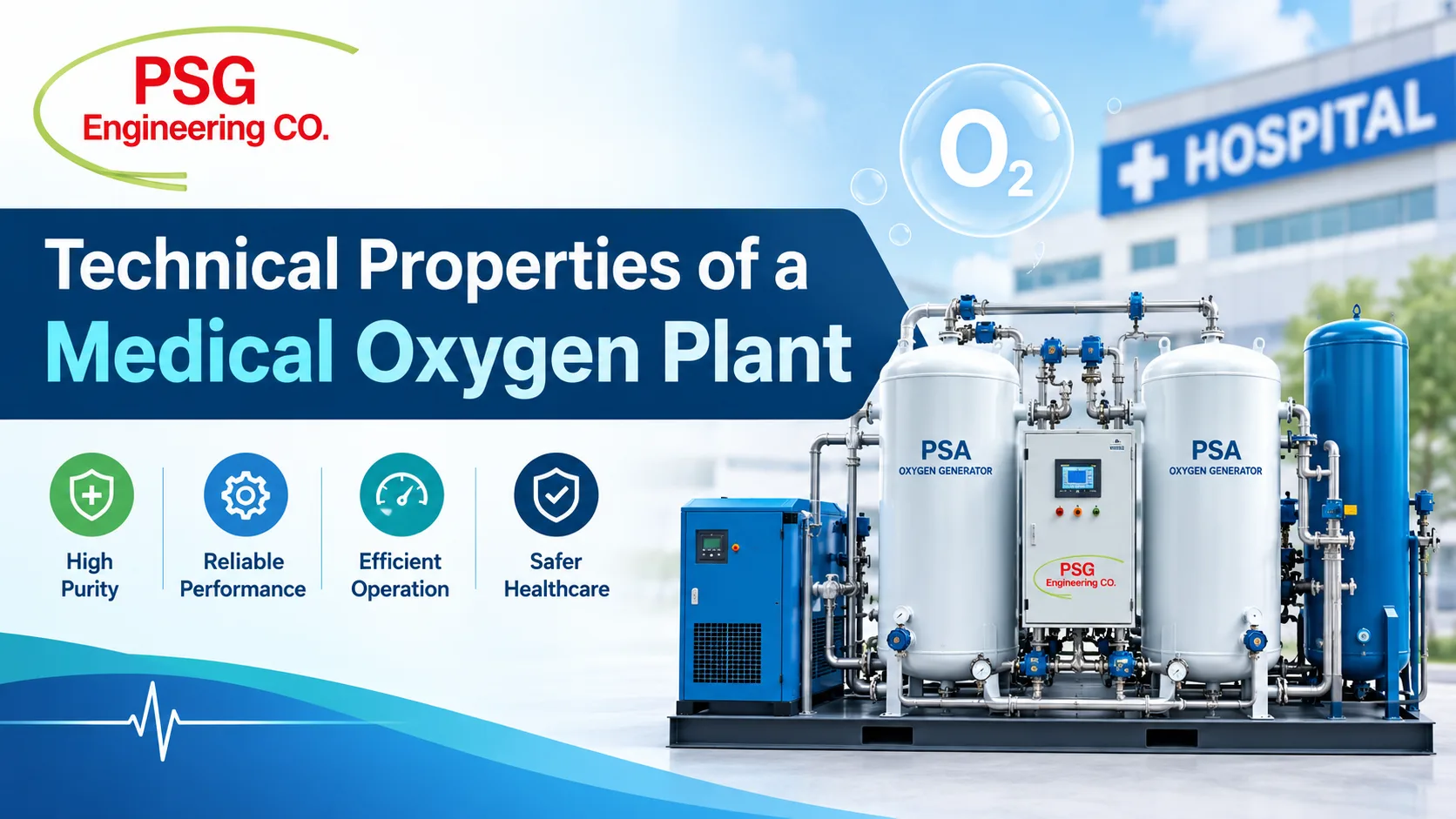
Medical Oxygen Plant is designed to generate a continuous supply of medical-grade oxygen directly at healthcare facilities. Most modern systems use PSA (Pressure Swing Adsorption) technology, in which compressed atmospheric air passes through zeolite molecular sieves to separate nitrogen and concentrate oxygen. WHO specifications identify PSA plants as a source of medical-grade oxygen and specify a target oxygen concentration of 93% ± 3%.
Among the different oxygen generation technologies, PSA (Pressure Swing Adsorption) is widely used for onsite medical oxygen production. The system separates oxygen from atmospheric air using special molecular sieve material and supplies oxygen at the required purity and pressure.
Important Technical Properties of a Medical Oxygen Plant
1. Oxygen Purity
Oxygen purity is one of the most important parameters of a medical oxygen generation system. PSA medical oxygen plants are generally designed to produce oxygen around 93% ± 3%, depending on the system configuration and applicable standards.
An online oxygen analyzer can continuously monitor the oxygen concentration. If the concentration falls below the specified level, an alarm can alert the operator so that corrective action can be taken.
2. PSA Technology
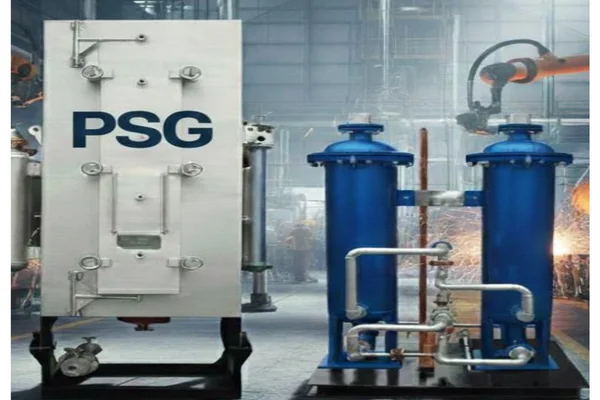
The core technology used in many medical oxygen plants is Pressure Swing Adsorption. The system normally uses two or more adsorption towers containing zeolite molecular sieve.
While one tower is producing oxygen, another tower undergoes regeneration by releasing the adsorbed nitrogen. This alternating operation enables continuous oxygen production without requiring frequent manual intervention.
3. Oxygen Production Capacity
The capacity of a Medical Oxygen Plant is selected according to the oxygen consumption of the healthcare facility. Small systems may be suitable for clinics and smaller hospitals, while larger plants can support hospitals with higher oxygen requirements.
Plant capacity is generally specified in Nm³/hr, while oxygen flow may also be expressed in LPM (litres per minute).
4. Outlet Pressure
The oxygen outlet pressure is another important technical property. The required pressure depends on the hospital’s medical gas pipeline and distribution system.
A properly designed PSA plant can supply oxygen at the required pressure, while additional oxygen boosting equipment can be considered where higher pressure is needed.
5. Zeolite Molecular Sieve
The molecular sieve is a key component of a PSA oxygen generator. Zeolite Molecular Sieve (ZMS) selectively captures nitrogen from compressed air.
The quality and operating condition of the molecular sieve directly affect oxygen production performance. Proper filtration and moisture control are therefore important for maintaining the efficiency and service life of the adsorption system.
6. Compressed Air System
Atmospheric air is the raw material for a PSA oxygen plant. Before entering the adsorption towers, the air generally passes through an air compressor, dryer and filtration system.
Clean and dry compressed air helps prevent contamination and moisture from affecting the molecular sieve. The air preparation system is therefore an important part of overall plant performance.
7. PLC and Automatic Control
Modern medical oxygen plants can incorporate a PLC-based automatic control system. The control panel can monitor parameters such as oxygen purity, pressure, valve operation, tower sequencing and system alarms.
An HMI can provide operators with a convenient interface for checking plant status and operating conditions. Automation also reduces the need for continuous manual control.
8. Online Oxygen Monitoring
Continuous oxygen monitoring improves the reliability of the plant. An oxygen analyzer measures the concentration of oxygen produced by the PSA system.
If the oxygen concentration moves outside the specified range, the system can provide an alarm to notify the operator. This helps healthcare facilities monitor oxygen quality during plant operation.
9. Oxygen Storage
An oxygen receiver or storage vessel can be integrated into the system to maintain a reserve of generated oxygen and manage variations in demand.
The appropriate storage capacity depends on the plant size, hospital consumption pattern, operating pressure and backup requirements.
Medical Oxygen Plant Manufacturers – PSG Engineering
PSG Engineering specializes in the design and supply of oxygen generation plants for industrial and medical applications. Its Medical Oxygen Plants are designed around the required oxygen capacity, purity, pressure and operating conditions of the healthcare facility.
We focus on PSA-based oxygen generation technology with features such as automatic operation, oxygen purity monitoring, molecular sieve adsorption and PLC-based control systems. We can also configure the plant according to the specific requirements of hospitals and other healthcare facilities.
Conclusion
Medical Oxygen Plant is an important solution for healthcare facilities that require a dependable onsite oxygen supply. The technical performance of the system depends on several factors, including oxygen purity, production capacity, outlet pressure, PSA technology, molecular sieve quality, compressed air treatment, oxygen monitoring and automatic controls.
Capacity and configuration is essential for achieving reliable operation. PSG Engineering provides Medical Oxygen Plant solutions designed according to the oxygen demand and technical requirements of the healthcare facility.