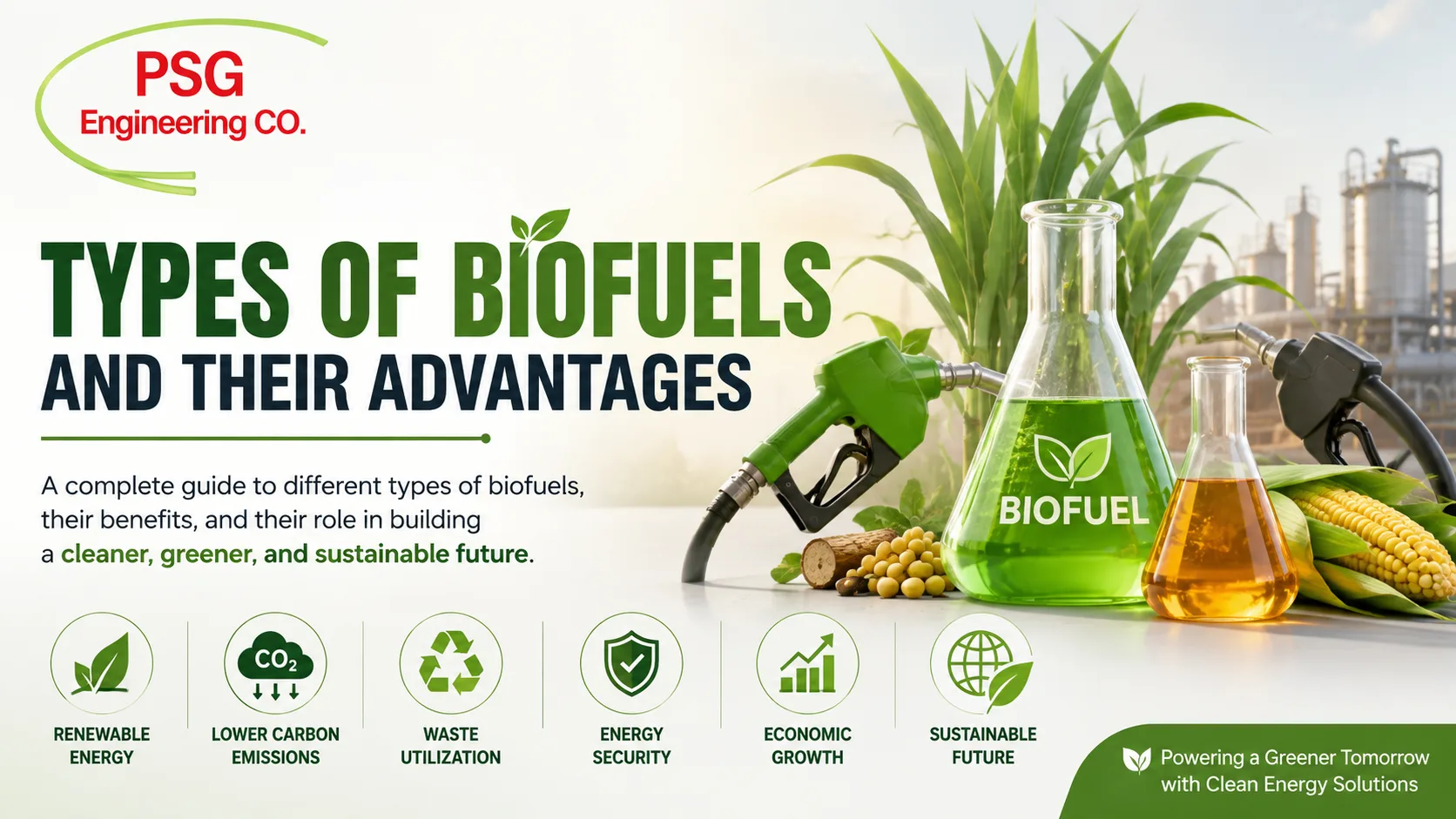
Biofuels have become an important alternative to conventional fossil fuels. Produced from renewable biological resources, biofuels help reduce greenhouse gas emissions, improve energy security, and support sustainable development. They are widely used in transportation, power generation, industrial heating, and aviation sectors.
In this blog, we’ll explore the different types of biofuels, their production methods, advantages, applications, and their role in building a sustainable future.
What Are Biofuels?
Biofuels are renewable fuels produced from organic materials known as biomass. These materials include agricultural crops, plant waste, food waste, animal waste, algae, and forestry residues. Unlike fossil fuels, biofuels can be replenished naturally, making them an environmentally friendly energy source.
Biofuels can be used in vehicles, industrial boilers, power plants, and even aircraft with minimal modifications to existing infrastructure.
Types of Biofuels
Biofuels are produced from organic materials such as crops, agricultural waste, algae, and animal waste. Biofuels help reduce carbon emissions, decrease dependence on petroleum, and support sustainable energy production. The four major types of biofuels are Biodiesel, Bioethanol, Biogas, and Biohydrogen.
1. Biodiesel
Biodiesel is a renewable fuel made from vegetable oils, animal fats, or recycled cooking oil. It is commonly used as a substitute for conventional diesel in vehicles and industrial machinery. Biodiesel burns cleaner than petroleum diesel and produces lower emissions. It is biodegradable, non-toxic, and can be used in most diesel engines with little or no modification.
Applications
- Diesel engines
- Construction equipment
- Agricultural machinery
- Marine transportation
Advantages
- Biodegradable
- Lower sulfur emissions
- Better lubrication
- Compatible with existing diesel engines
2. Bioethanol
Bioethanol is an alcohol-based fuel produced by fermenting sugar and starch-rich crops such as sugarcane, corn, and wheat. It is mainly blended with petrol to reduce harmful emissions and improve combustion efficiency. Bioethanol is one of the most widely used biofuels worldwide and represents the first generation of biofuel technology.
Applications
- Blended with petrol
- Passenger vehicles
- Industrial solvents
- Chemical manufacturing
Advantages
- Reduces carbon emissions
- Cleaner combustion
- Renewable fuel source
- Improves engine efficiency
3. Biogas
Biogas is produced through the anaerobic digestion of organic waste, including food waste, animal manure, agricultural residues, and sewage sludge. It mainly consists of methane and carbon dioxide and is used for cooking, electricity generation, and industrial heating. Biogas also helps in effective waste management while reducing greenhouse gas emissions.
Applications
- Cooking fuel
- Electricity generation
- Industrial heating
- Combined heat and power (CHP) systems
Advantages
- Converts waste into energy
- Reduces landfill waste
- Low greenhouse gas emissions
- Produces nutrient-rich organic fertilizer
4. Biohydrogen
Biohydrogen is hydrogen gas produced from biological sources such as biomass, algae, or microorganisms. It is considered one of the cleanest fuels because it emits only water during use. Biohydrogen has great potential for future transportation, power generation, and industrial applications. With the growing demand for clean energy, PSG Engineering, a trusted Hydrogen Gas Plant Manufacturer, provides advanced hydrogen gas generation plants for various industrial applications.
Advantages
- Zero carbon emissions at the point of use
- High energy efficiency
- Clean fuel technology
- Supports decarbonization goals
5. Biomethane
Biomethane is a renewable fuel produced by upgrading biogas to remove impurities such as carbon dioxide, moisture, and hydrogen sulfide. The result is a high-purity methane gas with properties similar to natural gas. Biomethane is used as a clean fuel for vehicles, industrial heating, electricity generation, and injection into natural gas pipelines. It helps reduce greenhouse gas emissions, promotes sustainable waste management, and serves as an eco-friendly alternative to conventional fossil fuels.
Applications
- Vehicle fuel
- Industrial heating
- Power generation
- Gas grid injection
Advantages
- High energy efficiency
- Low emissions
- Renewable alternative to natural gas
Biofuels Vs Fossil Fuels
| Feature | Biofuels | Fossil Fuels |
|---|---|---|
| Source | Renewable biomass | Non-renewable petroleum, coal, natural gas |
| Carbon Emissions | Lower | Higher |
| Sustainability | Renewable | Limited resources |
| Environmental Impact | Lower | Higher |
| Waste Utilization | Yes | No |
Which two forms of Alcohol do we include in Biofuels
The two main forms of alcohol used in biofuels are Bioethanol and Biobutanol.
Bioethanol is the most widely used alcohol-based biofuel. It is produced by fermenting crops such as sugarcane, corn, and wheat and is commonly blended with petrol to reduce emissions.
Biobutanol is another renewable alcohol fuel made from biomass through fermentation. It has a higher energy content than bioethanol and can be blended with gasoline or used as an alternative transportation fuel with fewer engine modifications.
Advantages of Biofuels
- Environmentally Friendly: Biofuels produce fewer greenhouse gas emissions compared to conventional fossil fuels.
- Renewable Energy Source: Unlike coal and petroleum, biofuels are derived from renewable biomass that can be replenished continuously.
- Reduced Air Pollution: Biofuels generally emit fewer pollutants such as sulfur oxides and particulate matter.
- Energy Security: Countries can reduce dependence on imported crude oil by producing biofuels locally.
- Waste Utilization: Organic waste materials can be converted into valuable fuel, reducing landfill disposal.
- Economic Development: Biofuel production creates employment opportunities in agriculture, manufacturing, logistics, and renewable energy sectors.
- Supports Circular Economy: Many biofuels utilize agricultural and industrial waste, contributing to efficient resource management.
Future of Biofuels in India
Biofuels look promising as future energy sources as governments and industries invest in cleaner energy technologies. Advances in biotechnology, waste-to-energy systems, and sustainable fuel production are making biofuels more efficient and commercially viable. As research and innovation continue to evolve, advanced biofuels are expected to play a significant role in reducing carbon emissions and improving global energy security. Their increasing adoption across transportation, aviation, power generation, and industrial sectors will help accelerate the transition toward a cleaner, more sustainable, and low-carbon future.
Role of PSG Engineering in the Biofuel Industry
The growing biofuel industry relies on efficient industrial gas solutions to improve production, storage, and fuel quality. Hydrogen is used in renewable fuel upgrading processes, while nitrogen helps protect biofuels during storage by preventing oxidation and contamination. PSG Engineering, a leading Hydrogen Gas Plant Manufacturer, provides advanced hydrogen gas generation systems for various industrial applications. We also manufacture and offer reliable Nitrogen Generation Plants that support safe and efficient biofuel handling.