Wastewater treatment is an essential process for protecting the environment, conserving water resources, and maintaining public health. Industries, municipalities, and commercial facilities generate large volumes of wastewater that must be treated before discharge or reuse. One of the most important factors influencing the efficiency of wastewater treatment is the availability of oxygen during biological treatment processes.
Wastewater Treatment Process and the Role of Oxygen Generators
Wastewater treatment is a process used to remove contaminants, organic matter, and harmful substances from wastewater before it is discharged into the environment or reused. The treatment process typically consists of several stages that work together to improve water quality and meet environmental standards.
Wastewater Treatment Process
1. Preliminary Treatment
At this stage, large solids, plastics, debris, and grit are removed using screens and grit chambers to protect downstream equipment.
2. Primary Treatment
Wastewater enters settling tanks where heavier solids settle at the bottom while oils and grease float to the surface for removal.
3. Secondary (Biological) Treatment
This is the most important stage where microorganisms break down dissolved organic pollutants. Aeration systems supply oxygen to support the growth of aerobic bacteria that consume and decompose organic matter.
4. Tertiary Treatment
Additional treatment processes such as filtration, nutrient removal, and disinfection are carried out to achieve higher water quality standards.
5. Sludge Treatment
The sludge generated during treatment is processed, stabilized, and disposed of or reused appropriately.
Oxygen Generator in Wastewater Treatment
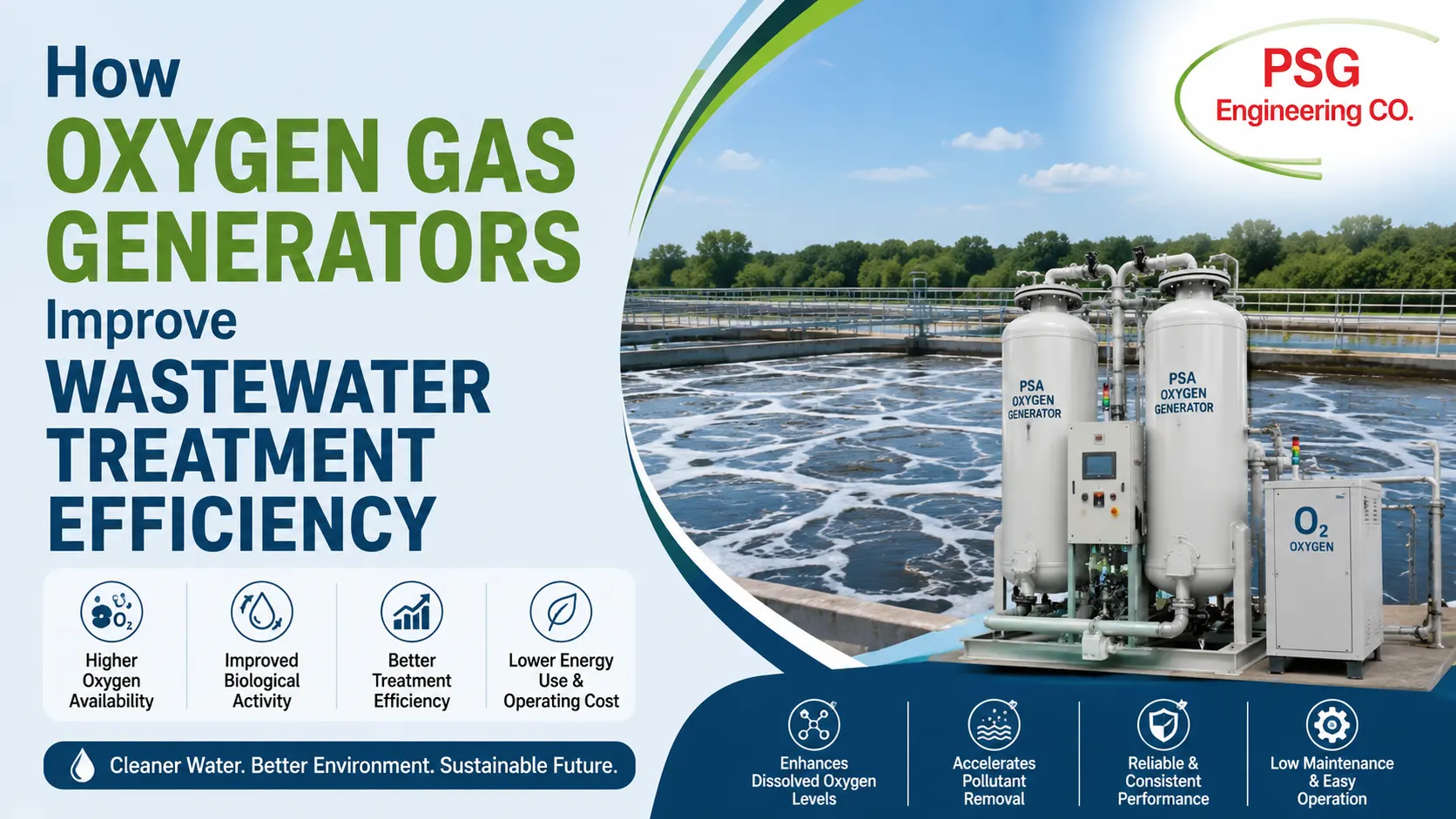
Oxygen is essential during the biological treatment stage because aerobic microorganisms require dissolved oxygen to break down organic contaminants efficiently. An Oxygen Plant supplies high-purity oxygen directly to the aeration tanks, enhancing the treatment process.
When oxygen levels are insufficient, treatment efficiency decreases, resulting in:
- Poor pollutant removal
- Unpleasant odors
- Increased sludge production
- Higher energy consumption
- Reduced treatment capacity
Maintaining adequate oxygen levels is therefore critical for ensuring optimal wastewater treatment performance.
How Oxygen Gas Generators Improve Wastewater Treatment Efficiency
Enhanced Biological Activity
Higher oxygen concentrations support the growth and activity of aerobic bacteria responsible for breaking down organic contaminants. This improves treatment performance and accelerates the decomposition process.
Faster Pollutant Removal
Oxygen-enriched treatment systems increase the efficiency of biological oxidation, allowing wastewater plants to remove pollutants more rapidly and effectively.
Increased Treatment Capacity
By improving oxygen transfer efficiency, wastewater treatment facilities can handle larger wastewater volumes without requiring significant infrastructure expansion.
Better Dissolved Oxygen Control
Oxygen gas generators provide a stable and controllable oxygen supply, helping operators maintain optimal dissolved oxygen levels throughout the treatment process.
Reduced Odor Problems
Insufficient oxygen often leads to anaerobic conditions that produce unpleasant odors such as hydrogen sulfide. Adequate oxygenation helps prevent odor formation and improves overall plant operations.
Lower Sludge Generation
Efficient aerobic digestion can reduce excess sludge production, lowering disposal and handling costs for wastewater treatment facilities.
Cost Savings Through On-Site Oxygen Generation
One of the primary advantages of oxygen gas generators is the elimination of dependence on external oxygen suppliers.
Reduced Oxygen Procurement Costs
On-site oxygen generation eliminates recurring expenses associated with purchasing, transporting, and storing liquid oxygen cylinders or tanks.
Lower Transportation Costs
Facilities no longer need frequent oxygen deliveries, reducing logistics costs and supply chain challenges.
Energy Efficiency
Modern PSA oxygen generators are designed for energy-efficient operation, helping wastewater treatment plants reduce operating expenses.
Minimal Maintenance
Oxygen generators require relatively low maintenance and offer reliable long-term performance, further contributing to cost savings.
Environmental Benefits
Sustainable Operations
Generating oxygen on-site reduces transportation-related emissions and contributes to more sustainable wastewater treatment practices.
Improved Water Quality
Enhanced treatment performance results in cleaner discharged water, helping facilities comply with environmental regulations and protect natural water resources.
Reduced Chemical Usage
Improved biological treatment efficiency may reduce the need for additional chemical treatments, minimizing environmental impact.
PSA Oxygen Generators for Wastewater
PSA (Pressure Swing Adsorption) technology has become the preferred solution for on-site oxygen generation due to its reliability and efficiency.
Key advantages include:
- Continuous oxygen production
- High oxygen purity levels
- Automated operation
- Low maintenance requirements
- Compact system design
- Cost-effective performance
- Long equipment lifespan
PSA oxygen generators provide a dependable oxygen supply that supports efficient wastewater treatment operations around the clock.
PSG Engineering – Trusted PSA Oxygen Plant Manufacturers
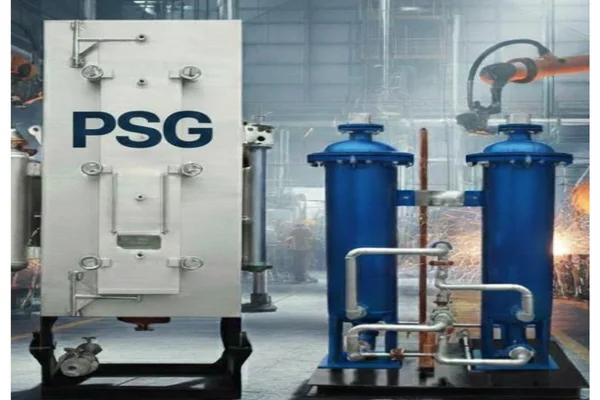
PSG Engineering, a leading PSA Oxygen Plant Manufacturer, offers advanced oxygen generation solutions designed for industrial and wastewater treatment applications.
With a focus on innovation, quality, and performance, we manufacture and deliver highly efficient Oxygen Generators for reliable oxygen production, energy efficiency, and long-term operational benefits. Our PSA oxygen gas generators are engineered to meet the demanding requirements of wastewater treatment facilities while helping clients reduce operating costs and improve process efficiency.
Conclusion
Oxygen plays a critical role in the effectiveness of wastewater treatment processes. By providing a reliable and continuous oxygen supply, oxygen gas generators significantly improve biological treatment efficiency, enhance pollutant removal, reduce odors, and lower operating costs.
As wastewater treatment facilities seek more sustainable and cost-effective solutions, on-site oxygen generation is becoming an increasingly attractive option. With advanced PSA Oxygen Plant by PSG Engineering, organizations can achieve higher treatment performance, better environmental compliance, and long-term operational savings.