Oxygen is one of the most essential elements on Earth. Representing approximately 21% of the Earth’s atmosphere, oxygen plays a vital role in sustaining life and supporting countless industrial, medical, and scientific processes. While most people associate oxygen with breathing, its applications extend far beyond human survival. From healthcare and manufacturing to aerospace and water treatment, oxygen gas is a critical resource that powers numerous industries worldwide.
In this article, we will explore the various uses of oxygen and its most important applications across different sectors.
Uses and Importance of Oxygen Gas
Oxygen is an essential element required for respiration in humans, animals, and plants. In addition to biological processes, oxygen is crucial in industrial operations, medical applications, and environmental technologies. The versatility of oxygen makes it indispensable across sectors, and modern technologies such as oxygen generators and oxygen plants help ensure a consistent supply for these purposes.
Differences Between Medical Oxygen and Industrial Oxygen
| Medical Oxygen | Industrial Oxygen |
|---|---|
| Used for patient care and respiratory support. | Used for industrial and manufacturing processes. |
| Produced under strict pharmaceutical standards. | Produced according to industrial quality standards. |
| Requires high purity and contamination-free handling. | Purity standards are focused on industrial applications. |
| Regulated by healthcare and pharmaceutical authorities. | Regulated by industrial safety and manufacturing regulations. |
| Used in hospitals, clinics, ambulances, and home care. | Used in welding, cutting, steel plants, and chemical industries. |
| Undergoes rigorous testing and quality control. | Quality control is based on industrial requirements. |
| Cylinders and storage systems are specially cleaned for medical use. | Storage systems may not meet medical-grade cleanliness standards. |
| Safe for human inhalation. | Not intended for human breathing. |
| Requires detailed documentation and traceability. | Documentation focuses on industrial compliance. |
| Essential for oxygen therapy, ICUs, and ventilators. | Essential for metal fabrication, glass production, and wastewater treatment. |
Uses of Oxygen Plant in Pharmaceutical Industry
1. Fermentation Processes
Fermentation is one of the most critical operations in pharmaceutical manufacturing. Products such as antibiotics, vaccines, enzymes, insulin, and probiotics are produced using microorganisms that require oxygen for growth and metabolism. An oxygen plant provides a continuous supply of oxygen to fermentation tanks, helping microorganisms remain active and productive. Adequate oxygen levels improve cell growth, increase product yield, shorten production cycles, and enhance overall manufacturing efficiency.
2. Medical Oxygen Supply
Many pharmaceutical companies also manufacture or supply medical oxygen to hospitals and healthcare facilities. An oxygen plant generates high-purity oxygen that can be processed and supplied for medical applications. This ensures a reliable source of oxygen for patients requiring respiratory support, intensive care treatment, and emergency medical services.
4. Research and Development Laboratories
Pharmaceutical R&D laboratories utilize oxygen for scientific experiments, analytical testing, and drug development activities. Oxygen is often required for biological studies, cell culture research, and laboratory-scale production processes. A dedicated oxygen plant ensures an uninterrupted supply for critical research operations.
5. Wastewater Treatment Systems
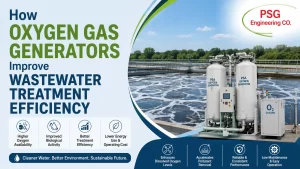
Pharmaceutical manufacturing generates wastewater containing organic compounds and process residues. Oxygen is supplied to biological treatment systems where microorganisms break down pollutants and contaminants. Higher oxygen levels improve treatment efficiency, reduce environmental impact, and help facilities comply with environmental regulations.
Oxygen Uses in Glass Manufacturing Industry
The glass industry uses oxygen-enriched combustion to increase furnace temperatures and improve production efficiency.
Benefits include:
- Reduced fuel consumption
- Lower emissions
- Higher production rates
- Improved glass quality
Pulp and Paper Industry
Oxygen is used extensively in paper manufacturing.
Applications include:
- Pulp bleaching
- Delignification processes
- Wastewater treatment
- Chemical recovery systems
Using oxygen reduces chemical consumption and improves environmental performance.
Oxygen Uses for Mining Operations
Oxygen is used to improve mineral processing and metal extraction efficiency. It supports various refining and processing operations by increasing reaction speeds and enhancing the recovery of valuable minerals. The use of oxygen helps mining companies achieve higher production rates, better resource utilization, and more efficient processing of ores such as gold, copper, and silver.
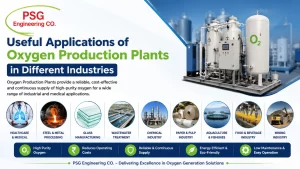
Role of Oxygen Plants and Oxygen Generators
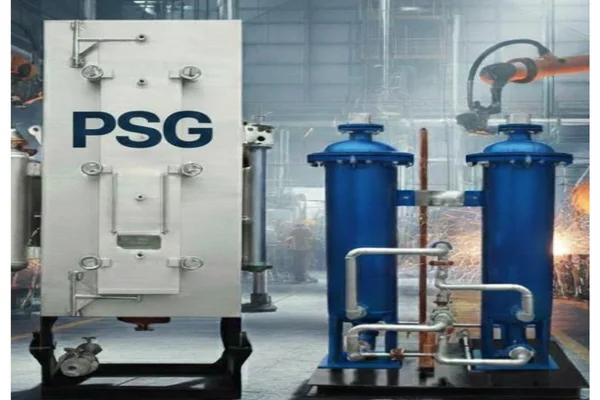
Modern industries and healthcare facilities cannot depend solely on oxygen cylinders due to limited supply and logistical challenges. This is where oxygen plants and oxygen generators play a critical role. These systems generate oxygen on-site, providing a continuous supply with high purity and reducing dependency on external suppliers.
- Continuous Supply – Oxygen plants ensure that hospitals, industries, and laboratories receive uninterrupted oxygen, which is vital for safety and operational efficiency.
- High Purity – Modern oxygen generators produce oxygen with purities ranging from 93% to 99.5%, suitable for medical, industrial, and laboratory applications.
- Cost-Effective – On-site generation reduces transportation, cylinder procurement, and storage costs.
- Scalable Solutions – Oxygen plants can be customized for small-scale laboratories, medium industrial operations, or large hospital networks.
Industrial Hubs Use Oxygen Plants
Oxygen plants and generators from PSG Engineering are installed in industrial and healthcare hubs across India. Sectors like steel manufacturing in Bellary, food processing in Hospete, and hospitals in Bengaluru and Chennai rely on continuous oxygen supply for operational efficiency and safety.
Conclusion
Oxygen is indispensable in healthcare, industry, environmental management, and food processing. With the increasing demand for reliable and high-purity oxygen, on-site solutions like oxygen plants and oxygen generators have become essential.
As a trusted Oxygen Gas Generation Plant Manufacturer, PSG Engineering delivers high-quality, efficient, and customizable oxygen systems that cater to the diverse requirements of hospitals, industries, and laboratories. Their expertise in designing and manufacturing oxygen plants ensures uninterrupted supply, high purity, and cost-effective solutions for every application.
For businesses and healthcare facilities seeking dependable oxygen supply, PSG Engineering provides robust and scalable solutions that enhance safety, productivity, and operational efficiency.