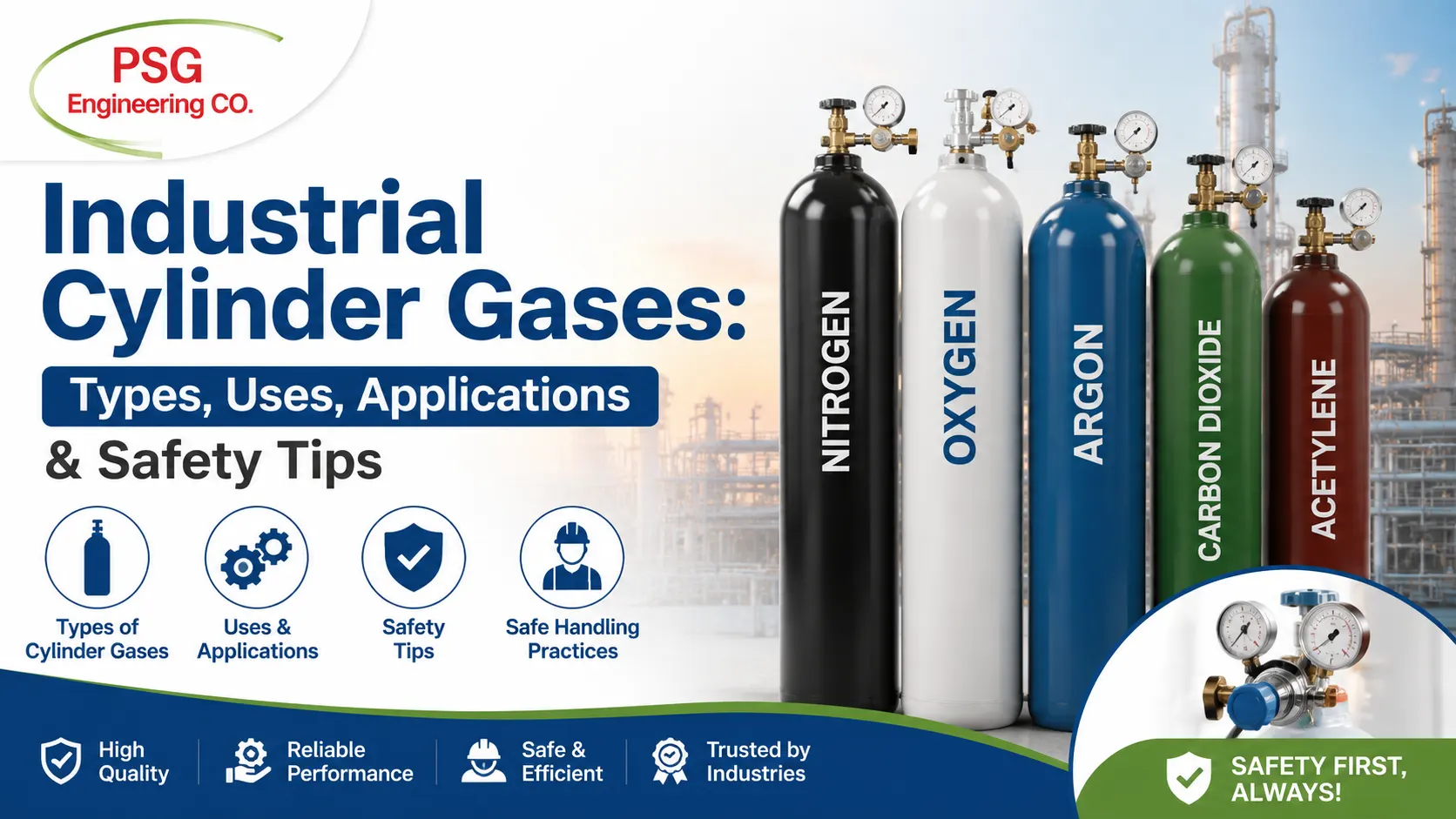
Cylinder gases play an important role in manufacturing, metal fabrication, chemical processing, food packaging, pharmaceuticals, healthcare, and many other industries. These gases are commonly supplied and stored in specially designed cylinders that can safely contain gases under pressure. Depending on the gas and application, cylinders may contain compressed, liquefied, or dissolved gases. `
From welding and cutting to inert-gas blanketing and industrial oxidation processes, cylinder gases support many day-to-day operations. Understanding the different types of gases, their applications, and proper handling practices is important for both productivity and workplace safety.
What Are Industrial Cylinder Gases?
Industrial cylinder gases are gases stored in specially manufactured pressure cylinders for transportation, storage, and controlled use. The cylinders are designed to withstand the pressure associated with their contents and are available in different capacities and configurations.
Definition of Cylinder Gas
Cylinder gas refers to a gas stored under pressure inside a specially designed cylinder for safe storage, transportation, and controlled use. These gases may be stored as compressed gases, liquefied gases, or dissolved gases, depending on their physical properties.
Cylinder gases are widely used in industrial, medical, laboratory, welding, manufacturing, and chemical applications. Common examples include oxygen, nitrogen, hydrogen, argon, carbon dioxide, and acetylene.
Gas Cylinders properties and applications vary significantly, so each gas requires appropriate storage, handling, regulators, valves, and safety procedures.
Types of Cylinder Gases
Different gases are selected according to the process requirements of an industry. Some of the most widely used gases include:
1. Oxygen Gas
Oxygen is commonly used in metal cutting, welding, combustion enhancement, steel manufacturing, and various industrial processes. It supports combustion and therefore needs to be kept away from oil, grease, sparks, and incompatible materials.
2. Nitrogen Gas
Nitrogen is an inert gas widely used where oxygen and moisture need to be minimized. It is used for tank blanketing, food packaging, chemical processing, electronics manufacturing, and various industrial processes.
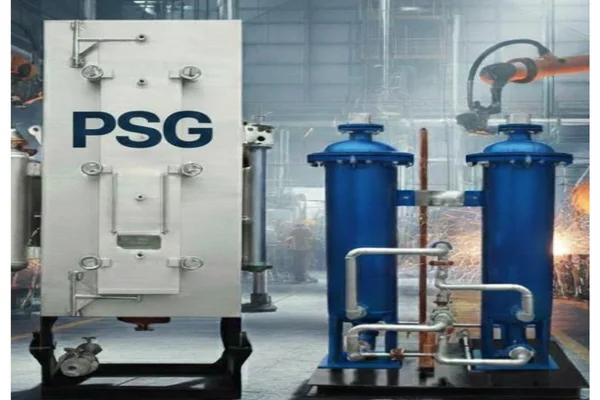
Nitrogen can also be generated on-site using PSA technology. PSG Engineering manufactures PSA nitrogen gas plants with listed capacities ranging from 5 to 1000 Nm³/hr, depending on the model and application.
3. Argon Gas
Argon is an inert gas frequently used in welding applications, particularly where shielding is required to protect the welding area from atmospheric contamination. It is also used in metal fabrication and other specialized industrial processes.
4. Carbon Dioxide
Carbon dioxide is used in beverage carbonation, food packaging, welding, fire-suppression applications, and several industrial processes. Depending on the application, the required purity and supply method can vary.
5. Hydrogen Gas
Hydrogen is used in chemical processing, hydrogenation, specialty manufacturing, and certain industrial energy applications. Because hydrogen is highly flammable, its storage and handling require carefully controlled procedures and suitable equipment.
6. Acetylene Gas
Acetylene is commonly associated with oxy-fuel welding and cutting operations. It provides a high-temperature flame when combined with oxygen and is therefore useful for metal fabrication and repair work.
7. Specialty and Calibration Gases
Industries and laboratories may also require specialty gas mixtures for analytical instruments, calibration, research, and process-control applications. These gases need accurate identification, appropriate cylinders, and controlled handling.
How Are Industrial Cylinder Gases Used?
Industrial cylinder gases have applications across many sectors.
Welding and Metal Fabrication
Oxygen, acetylene, argon, and other shielding gases are widely used in welding and cutting. The correct gas combination depends on the material, welding process, and required finish.
Food and Beverage Industry
Nitrogen and carbon dioxide are commonly used in food and beverage applications. Nitrogen can help create an inert atmosphere during packaging, while carbon dioxide is widely associated with beverage carbonation.
Chemical Industry
Industrial gases are used for chemical reactions, inerting, blanketing, oxidation, and process control. Nitrogen, oxygen, hydrogen, and other gases can perform very different roles depending on the process.
Pharmaceutical Industry
Controlled gas environments can be important in pharmaceutical manufacturing and packaging. Gas purity, contamination control, and reliable supply are particularly important in these applications.
Healthcare
Medical oxygen and other medical gases are supplied through cylinders and centralized gas systems. Such applications require appropriate medical-grade gases and strict handling procedures.
Industrial Gas Generation
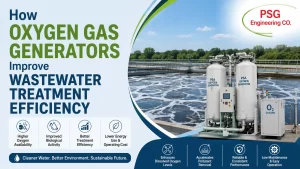
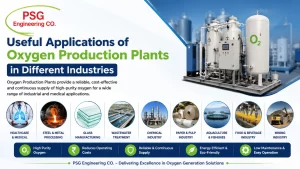
Instead of continuously purchasing cylinders, some facilities with significant gas requirements use on-site generation systems. For example, PSG Engineering manufactures PSA-based oxygen generation plants designed for continuous on-site oxygen production. Its published specifications include oxygen purity of approximately 93% ±3%, with capacity options from 5 to 200 Nm³/hr and higher capacities available on request.
Types of Gas Cylinder Material
Gas cylinders are manufactured using different materials depending on the gas type, pressure, application, weight requirements, and operating environment. The most common materials are:
1. Carbon Steel Gas Cylinders
Carbon steel is one of the most commonly used materials for industrial gas cylinders. It provides high strength and durability and is suitable for storing gases under high pressure. These cylinders are generally economical and widely used for gases such as oxygen, nitrogen, hydrogen, and other industrial gases.
2. Alloy Steel Gas Cylinders
Alloy steel cylinders are manufactured using steel combined with elements such as chromium, molybdenum, or manganese. This provides improved strength-to-weight performance compared with conventional carbon steel.
They are commonly selected for high-pressure gas storage and industrial applications where mechanical strength and reliability are important.
3. Stainless Steel Gas Cylinders
Stainless steel offers excellent resistance to corrosion and contamination. It is particularly useful where the cylinder may be exposed to moisture, corrosive environments, or gases requiring clean internal surfaces.
These cylinders are often considered for specialty gases, laboratory applications, medical applications, and corrosive-gas services, depending on the specific material grade and regulatory requirements.
4. Aluminium Gas Cylinders
Aluminium cylinders are significantly lighter than many steel alternatives, making them useful where portability is important. They are commonly used for medical gases, breathing gases, and portable gas applications.
Their lighter weight makes transportation and handling easier, although their pressure and application suitability must be evaluated according to the cylinder’s certified design.
5. Composite Gas Cylinders
Composite cylinders are made using a combination of materials, often involving a polymer or metal liner reinforced with materials such as carbon fiber or fiberglass. They are designed to reduce weight while maintaining the required pressure capability.
Composite cylinders are increasingly used where low weight, portability, and corrosion resistance are important.
Benefits of Using Industrial Cylinder Gases
Cylinder-based gas supply can offer several advantages:
- Easy transportation and handling when properly managed
- Suitable for small and medium gas requirements
- Availability of different gas types and purities
- Convenient replacement when a cylinder becomes empty
- Suitable for temporary and permanent industrial applications
- Can be integrated with regulators and gas distribution systems
- Useful for processes requiring controlled gas flow
For facilities with high and continuous gas consumption, however, an on-site generation system may offer an alternative to relying entirely on cylinder supply.
Important Safety Tips for Industrial Gas Cylinders
Gas cylinders contain pressurized materials, and improper handling can create serious hazards. Safety should therefore be considered throughout storage, transportation, connection, and operation.
1. Identify the Gas Before Use
Always verify the cylinder label and identification before connecting it to equipment. Never rely only on the cylinder’s appearance or assumed color coding.
2. Keep Cylinders Upright
Cylinders should generally be stored securely in an upright position where applicable, using suitable restraints to prevent falling or tipping.
3. Keep Away From Heat and Ignition Sources
Flammable gases should be kept away from flames, sparks, hot surfaces, and other ignition sources. Oxygen cylinders should also be kept away from combustible materials and oil or grease.
4. Use the Correct Regulator
Use a regulator, valve connection, hose, and other accessories compatible with the specific gas and operating pressure. Do not interchange unsuitable equipment.
5. Check for Leaks
Gas connections should be inspected regularly for leakage. If a leak is suspected, follow the site’s emergency procedure and use appropriate detection methods rather than attempting unsafe repairs.
6. Store Cylinders in a Suitable Area
Storage areas should be well organized, adequately ventilated, protected from physical damage, and separated according to gas compatibility and applicable safety requirements.
7. Handle Cylinders Carefully
Do not drag, drop, roll, or roughly handle cylinders. Use suitable cylinder carts or handling equipment when moving them.
8. Provide Employee Training
Employees who handle industrial gases should understand the properties and hazards of the gases they work with, along with emergency procedures and the correct use of personal protective equipment.
Why Choose PSG Engineering for Industrial Gas Solutions?
PSG Engineering is an industrial engineering company based in Hapur, Uttar Pradesh, offering solutions including nitrogen gas generation plants, oxygen gas generation plants, air dryers, storage tanks, industrial catalysts and chemicals, and related gas-processing equipment.
The company offers PSA nitrogen generation systems for industrial applications, with published flow capacities from 5 to 1000 Nm³/hr and nitrogen purity options up to 99.9995%, depending on the configuration.
PSG Engineering also states that its quality and safety management systems include ISO 9001:2015 and ISO 45001:2018 certifications, with the latter covering manufacturing activities including PSA nitrogen and oxygen plants, compressed-air dryers, gas-drying systems, compressed-gas storage tanks, and heat exchangers.
Conclusion
Industrial cylinder gases are essential for numerous manufacturing and processing applications. Oxygen supports cutting and combustion, nitrogen provides inert environments, argon is widely used for shielding, carbon dioxide serves food and industrial applications, while hydrogen and acetylene have specialized uses.
However, choosing the correct gas is only one part of a safe gas-handling system. Proper identification, compatible equipment, secure storage, leak inspection, employee training, and compliance with applicable safety requirements are equally important.
For industries looking beyond conventional cylinder supply, on-site gas generation can also be considered where gas consumption is high and continuous. PSG Engineering provides industrial nitrogen and oxygen generation solutions along with gas-related equipment to support different industrial requirements.
Before selecting any industrial gas or gas-generation system, businesses should evaluate the required purity, flow rate, pressure, operating environment, consumption pattern, and applicable safety standards to determine the most suitable solution.