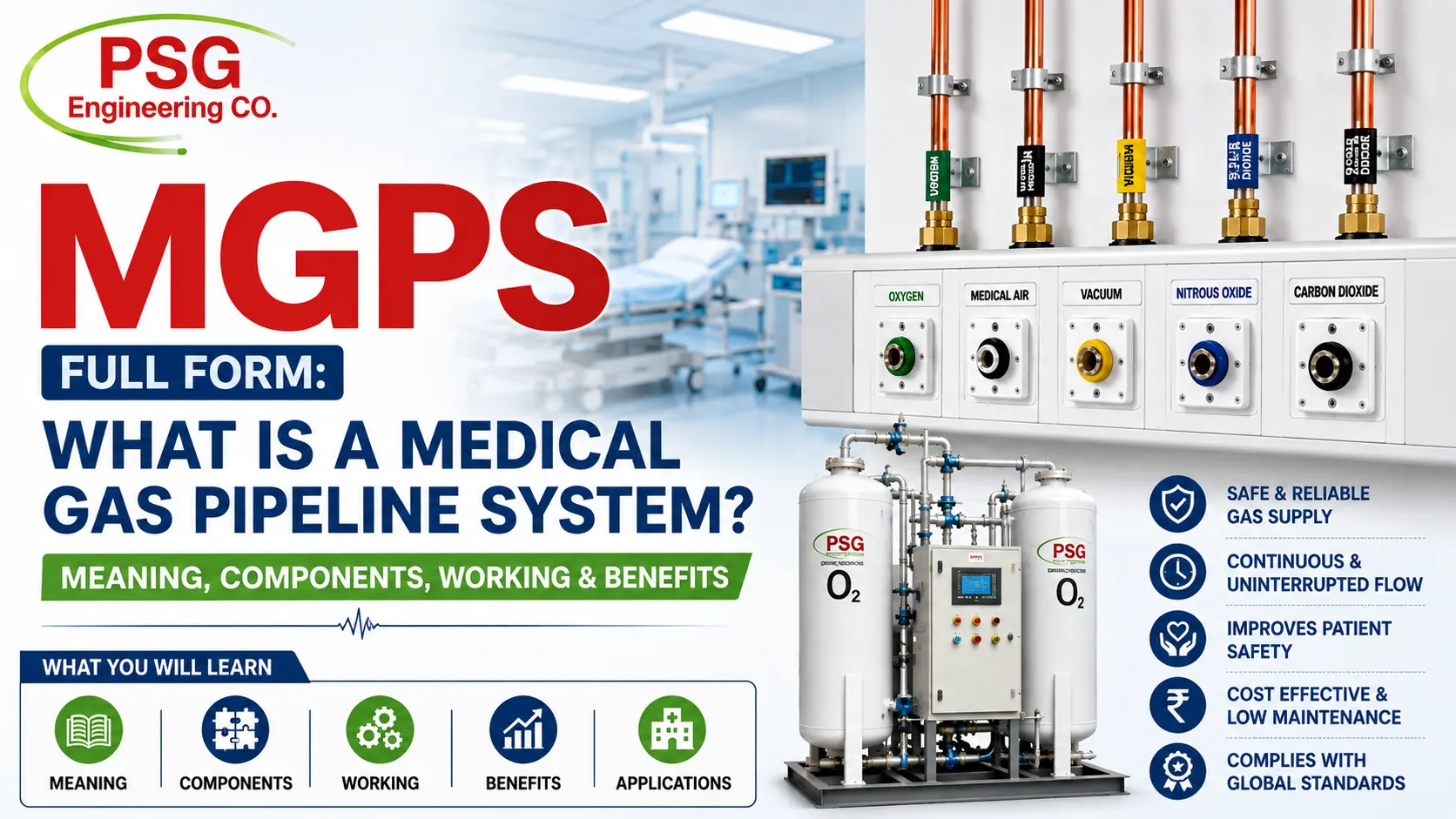
Modern hospitals rely on advanced medical infrastructure to provide safe and efficient patient care. One of the most critical systems in any healthcare facility is the Medical Gas Pipeline System (MGPS). It ensures a continuous and reliable supply of medical gases such as oxygen, nitrous oxide, medical air, carbon dioxide, and vacuum to different hospital departments without the need to transport individual gas cylinders.
An efficient MGPS not only improves operational efficiency but also enhances patient safety by providing uninterrupted medical gas supply during surgeries, emergency treatments, intensive care, and routine healthcare procedures.
What is the Full Form of MGPS?
MGPS stands for Medical Gas Pipeline System.
It is a centralized network of pipelines, manifolds, valves, alarm systems, and outlet points that safely distributes medical gases from a central source to various hospital departments. Instead of using separate gas cylinders in every room, the MGPS supplies gases directly through dedicated pipelines, ensuring continuous availability whenever required.
What is a Medical Gas Pipeline System?
A Medical Gas Pipeline System is a specially designed network that transports medical gases under controlled pressure throughout a healthcare facility. The system is installed according to strict medical standards to maintain purity, pressure stability, and patient safety.
MGPS is commonly installed in:
- Hospitals
- Nursing Homes
- Multi-specialty Healthcare Centers
- Medical Colleges
- Operation Theatres
- Intensive Care Units (ICU)
- Neonatal Intensive Care Units (NICU)
- Emergency Rooms
- Diagnostic Laboratories
- Dental Clinics
The system eliminates manual handling of gas cylinders while reducing operational costs and improving hospital efficiency.
MGPS in Hospital
A Medical Gas Pipeline System (MGPS) is one of the most essential infrastructure systems in a hospital. It is designed to provide a safe, continuous, and centralized supply of medical gases such as oxygen, medical air, nitrous oxide, carbon dioxide, and vacuum to various departments, including operation theatres, intensive care units (ICUs), emergency rooms, and patient wards. Instead of relying on individual gas cylinders, an MGPS distributes medical gases through a network of medical-grade copper pipelines, ensuring uninterrupted availability whenever needed
PSG Engineering provides advanced oxygen generation systems and complete medical gas solutions that integrate seamlessly with hospital MGPS installations, ensuring a reliable and uninterrupted oxygen supply for healthcare facilities.
Medical Gases Supplied Through MGPS
An MGPS can distribute several essential medical gases depending on hospital requirements.
- Medical Oxygen: Medical oxygen is the most frequently used gas for respiratory support, ventilators, anesthesia machines, and critical patient care.
- Medical Air: Medical air is supplied to ventilators and respiratory equipment requiring clean, dry compressed air.
- Vacuum: Medical vacuum systems remove fluids, blood, and secretions during surgeries and emergency treatments.
- Nitrous Oxide: Nitrous oxide is commonly used as an anesthetic gas during surgical procedures.
- Carbon Dioxide: Carbon dioxide is used in laparoscopic surgeries and various medical procedures.
- Surgical Air: Surgical air powers specialized medical equipment and surgical instruments.
Major Components of MGPS
A Medical Gas Pipeline System consists of several interconnected components that work together to ensure a safe and uninterrupted gas supply.
Oxygen Generation System
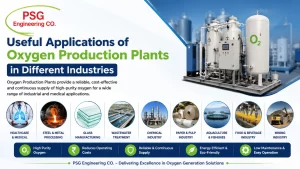
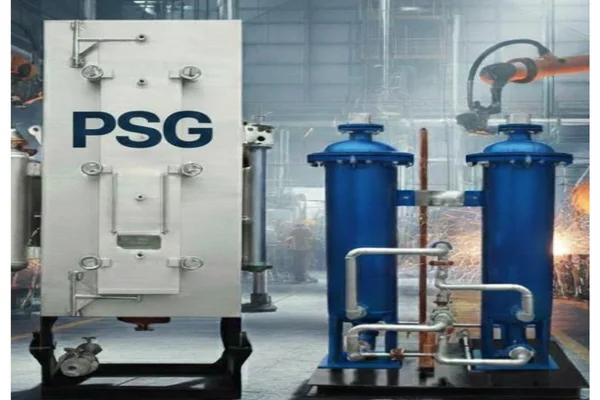
Modern hospitals increasingly use onsite oxygen generators instead of relying solely on cylinders. As a leading Oxygen Generator Manufacturer, PSG Engineering supplies high-performance PSA oxygen generators that produce medical-grade oxygen continuously, reducing dependence on external gas suppliers.
Medical Gas Manifold
The manifold connects multiple gas cylinders or storage tanks and regulates gas flow into the pipeline network.
Copper Pipeline Network
Special medical-grade copper pipes transport gases safely throughout the hospital while preventing contamination.
Zone Valve Boxes
Zone valves allow maintenance teams to isolate gas supply to specific hospital areas without affecting the entire facility.
Area Alarm Panels
Alarm systems continuously monitor gas pressure and immediately notify staff if abnormal pressure levels occur.
Medical Gas Outlet Points
These outlets are installed in patient rooms, ICUs, operation theatres, and emergency wards for connecting ventilators, oxygen masks, anesthesia machines, and other medical devices.
How Does an MGPS Work?
The Medical Gas Pipeline System operates through a centralized distribution process.
- Medical gases are generated onsite or stored in cylinders or liquid oxygen tanks.
- Pressure regulators maintain the required operating pressure.
- Medical-grade copper pipelines distribute gases throughout the hospital.
- Zone valves control gas flow to different departments.
- Alarm systems monitor pressure and gas availability continuously.
- Medical staff access gases through wall-mounted outlet terminals connected to medical equipment.
This automated process ensures that every department receives the required gas supply without interruption.
Benefits of Medical Gas Pipeline Systems
Continuous Gas Supply
MGPS provides uninterrupted availability of medical gases, which is essential for critical care and emergency treatments.
Enhanced Patient Safety
Proper pressure regulation and contamination-free pipelines ensure patients receive pure medical gases at all times.
Reduced Manual Handling
Hospitals no longer need to move heavy gas cylinders between departments, improving workplace safety.
Improved Hospital Efficiency
Medical staff can focus on patient care rather than managing gas cylinder logistics.
Cost Savings
Centralized gas distribution reduces wastage, transportation expenses, and cylinder replacement costs.
Better Infection Control
Fixed pipeline systems reduce contamination risks associated with frequent cylinder handling.
Compliance with Healthcare Standards
Modern MGPS installations comply with national and international healthcare safety standards.
Why Oxygen Generators are Becoming Essential for MGPS
Traditionally, hospitals depended entirely on oxygen cylinders and liquid oxygen tanks. However, onsite oxygen generation has become the preferred solution due to its reliability and cost-effectiveness.
PSA Oxygen Generators provide hospitals with:
- Continuous oxygen production
- Reduced oxygen procurement costs
- Lower dependency on cylinder suppliers
- Increased emergency preparedness
- High-purity medical oxygen
- Automated operation with minimal maintenance
This makes oxygen generators an integral part of modern MGPS installations.
Conclusion
Medical Gas Pipeline System (MGPS) is the backbone of every modern hospital, ensuring a safe, continuous, and efficient supply of essential medical gases to critical healthcare areas. By replacing manual cylinder handling with a centralized pipeline network, MGPS improves patient safety, enhances operational efficiency, and reduces overall healthcare costs.
For hospitals looking to build a dependable medical gas infrastructure, you can consider the name of an experienced Oxygen Generator Manufacturer, PSG Engineering offers advanced oxygen generation systems and reliable solutions that integrate seamlessly with MGPS, helping healthcare facilities deliver uninterrupted patient care while meeting the highest standards of safety and performance.
Frequently Asked Questions (FAQs)
1. What is the full form of MGPS?
MGPS stands for Medical Gas Pipeline System, a centralized network that supplies medical gases safely throughout hospitals and healthcare facilities.
2. What gases are supplied through an MGPS?
An MGPS typically supplies medical oxygen, medical air, vacuum, nitrous oxide, carbon dioxide, and surgical air.
3. Why is MGPS important in hospitals?
It ensures a continuous, safe, and centralized supply of medical gases, reducing manual cylinder handling and improving patient care.
4. What is the role of an oxygen generator in an MGPS?
An oxygen generator produces medical-grade oxygen onsite, reducing dependence on cylinders and ensuring an uninterrupted oxygen supply.
5. Why choose PSG Engineering for oxygen generation solutions?
PSG Engineering is a trusted Oxygen Generator Manufacturer offering high-performance PSA oxygen generators and reliable medical gas solutions designed for hospitals, healthcare centers, and medical institutions.